Research impact
New Grant Received
FY25
$173,920,842
AI is good at weather forecasting. Can it predict freak weather events?

Artificial intelligence is transforming weather forecasting—but scientists are uncovering its limits when it comes to predicting the most extreme events. In a new study, researchers tested the ability of AI models to forecast unprecedented disasters like Category 5 hurricanes—and found that these models often fall short when events lie outside their training data.
The study was co-authored by Assistant Professor of Applied Mathematics Ashesh Chattopadhyay, whose work focuses on bringing greater mathematical rigor to AI systems. By integrating physics-based principles into neural networks, Chattopadhyay and collaborators are working to close a critical gap in climate prediction.
Equity implications of lithium extraction in California
In California’s Imperial Valley, a history of broken promises haunts hopes for economic renewal. Now, with vast underground lithium reserves and growing demand for clean energy, the region is being rebranded as “Lithium Valley.” But will this new boom deliver lasting prosperity—or repeat past cycles of exploitation?
Professor Chris Benner, alongside co-author Manuel Pastor, tackles this question in their new book Charging Forward. Drawing on years of research, Benner outlines what a just transition could look like—one where lithium extraction benefits local communities, creates good jobs, and avoids deepening inequality in a region long marked by environmental harm and economic distress.
Innovative and artful rainwater harvesting nourishes gardens and hope
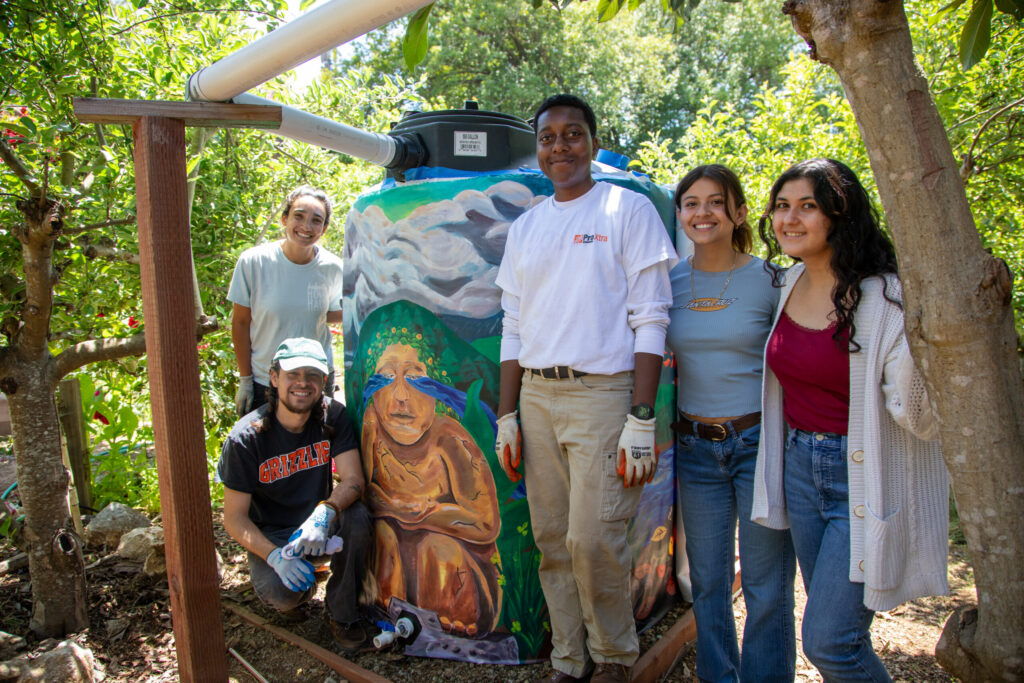
A team of scientists, engineers, artists, and students is turning rooftops into reservoirs with a gravity-fed rainwater harvesting system designed to grow food during the dry season. Led by astronomer and avid gardener Alexie Leauthaud-Harnett, the project received seed funding from the Center for Coastal Climate Resilience and is rooted in community engagement, student innovation, and climate justice.
With 500-gallon tanks and student-built garden beds, the system has already produced hundreds of heads of lettuce using only collected rainwater. Now, the team is building educational tools and scalable models to inspire others—and planting seeds of resilience across Santa Cruz.
Creating enchantment in Senegal
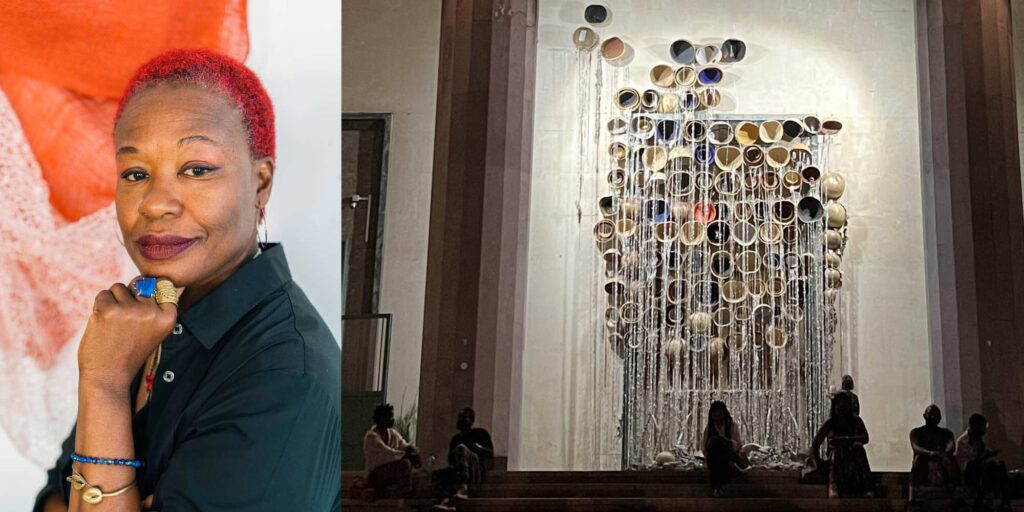
Selected as one of only three U.S. artists featured in the 15th Dakar Biennale, Ulysse brought her rasanblaj practice—part ethnography, part ritual—to Senegal, exploring the entangled histories of Haiti and West Africa. Her installation, For Those Among Us Who Inherited Sacrifice, merged archival research, performance, and material culture into an act of creative resistance. It’s a landmark moment for a scholar who insists art and anthropology must speak together.
At Africa’s most prominent art event, Humanities Professor Gina Athena Ulysse created her most ambitious work yet: a towering cascade of calabashes, cowries, and twine that transforms a Brutalist courthouse into a textured, living monument.
New chemical process makes biodiesel production easier, less energy intensive
Chemists have developed a new method for turning waste vegetable oil into biodiesel—offering a simpler, low-temperature, and more sustainable alternative to conventional production. Led by Ph.D. student Kevin Lofgren and Professors Scott Oliver and Bakthan Singaram, the team discovered that using sodium tetramethoxyborate allows for easier separation of fuel from byproducts and enables reuse of the most expensive ingredient in the process.
The reaction takes place at just 40°C and converts 85% of waste oil into fuel—potentially transforming biodiesel into a more accessible, carbon-neutral option for the trucks, trains, and boats still reliant on diesel today.
Reviving Indigenous languages: $600,000 grant honors the linguistic tapestry of Oaxacan immigrants in California
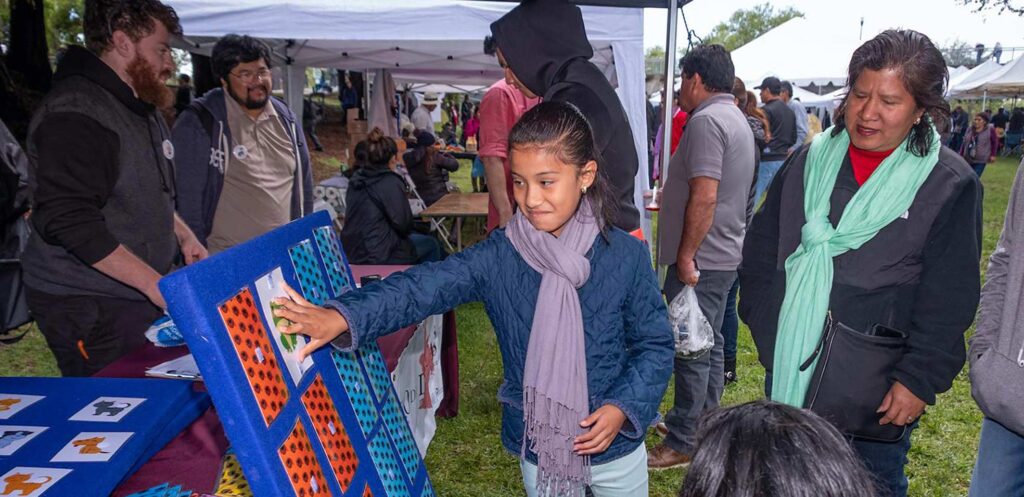
Indigenous Oaxacan languages are a vital thread connecting immigrant communities on California’s Central Coast to their cultural roots—but these languages face steep barriers to survival. At UC Santa Cruz, researchers are working to change that through a new community-engaged project that explores the role of language in shaping identity, memory, and belonging.
Led by The Humanities Institute and linguist Maziar Toosarvandani, the initiative builds on years of collaboration with the nonprofit Senderos and includes field-based research, public storytelling, and an upcoming exhibition at the Santa Cruz Museum of Art & History. Supported by a $607,000 federal grant, the project brings Indigenous voices and scholarship together to highlight a rich, often-overlooked cultural legacy.
Coral-reef restoration can be cost-effective for saving lives, money
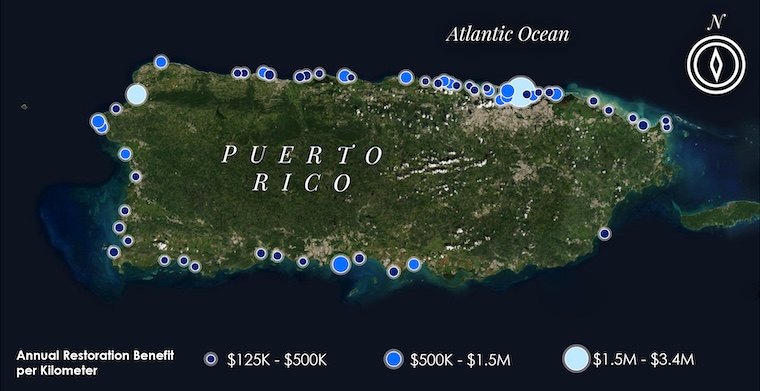
A new study co-led by Associate Professor Borja Reguero and Center for Coastal Climate Resilience Director Michael Beck shows that restoring coral reefs in Florida and Puerto Rico could save lives and prevent hundreds of millions of dollars in storm damage each year—especially for vulnerable communities. The research uses high-resolution modeling to quantify how restored reefs reduce coastal flooding, offering greater protection to children, the elderly, and low-income residents living inland.
The study positions coral reef restoration as a cost-effective, nature-based solution to climate risk—one that could reshape how we fund and implement coastal resilience.
Strontium isotope map for all of sub saharan Africa
A UC Santa Cruz-led team has unveiled the first-ever continent-wide strontium isotope map of Sub-Saharan Africa, revealing unique “geologic fingerprints” that can help trace the origins of people, plants, animals, and artifacts. The map offers groundbreaking tools for researchers investigating histories of enslavement, wildlife trafficking, and human migration.
Spearheaded by anthropology professor Vicky Oelze and postdoctoral fellow Xueye Wang, the decade-long project analyzed more than 2,000 samples—many from previously uncharted regions. The open-access tool can help restore lost identities and cultural legacies, while also supporting conservation efforts and forensic investigations across the globe.
Long read sequencing reveals more genetic information while cutting time and cost of rare disease diagnoses
Each year, millions of people—many of them children—suffer from rare genetic diseases that remain undiagnosed for years, delaying critical treatment. But a new UC Santa Cruz-led study offers hope: long-read sequencing could revolutionize genetic diagnostics by dramatically shortening that timeline—from years to days—and delivering clearer answers with a single, cost-effective test.
The research highlights how long-read technology reveals hidden genetic variants and epigenetic data often missed by conventional short-read methods. The team successfully diagnosed 11 of 42 complex cases, showing how UCSC’s innovations in sequencing and analysis could transform rare disease research and care.
Professor Sharon Daniel collaborates with Georgetown University in innovative social justice program
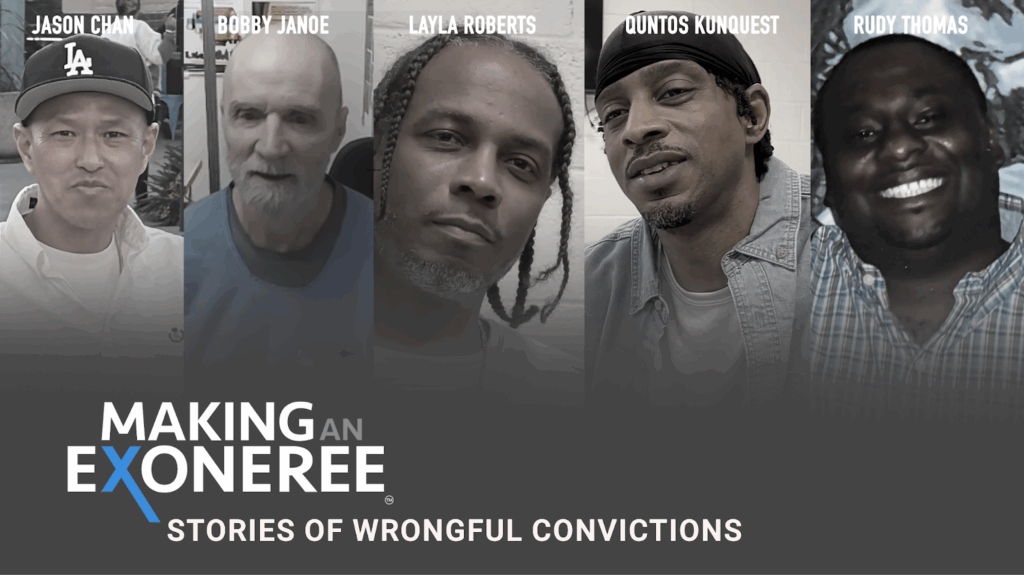
UC Santa Cruz is using the power of storytelling to expose injustices in the criminal legal system through Making an Exoneree, a student-driven course and film project led by Film and Digital Media Professor Sharon Daniel. Partnering with Georgetown University since 2021, UC Santa Cruz students investigate wrongful convictions and produce documentaries that humanize those unjustly incarcerated.
This year’s showcase—the first held on our campus—featured four films about five individuals whose lives were upended by official misconduct, coerced confessions, and systemic bias. More than a screening, the event offered viewers an opportunity to confront uncomfortable truths and join a growing movement for justice and reform.