Leading the change
Unparalleled Undergraduate Student Education and Experience
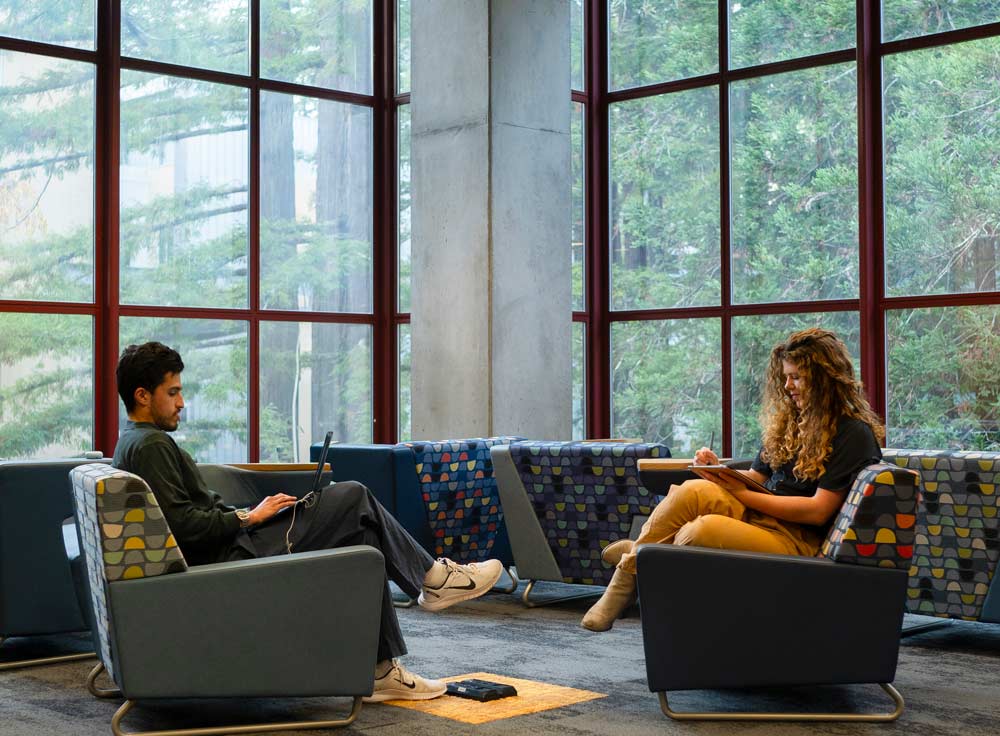
UC Santa Cruz is continuing to pursue projects that build and support student engagement and communities.
The campus began a renovation of the Bay Tree Building in winter 2026, a transformation in the heart of campus that will bring fresh energy, modern design, and new opportunities for connection.
The building is scheduled to reopen for the 2027–28 academic year as a space that is more welcoming, more accessible, and more reflective of the ways students learn, gather, and thrive today.
The renovation includes a brand-new student lounge—an expansive open area for meeting, studying, and hanging out—as well as a reimagined campus market designed with student needs in mind, and a central home for the campus resource centers. Bringing these services together under one roof will make it easier than ever for students to access support, build community, and feel at home.
The second and final phase of the comprehensive renewal of Kresge College is scheduled to be finished in the 2026–27 academic year, with additional housing for undergraduate students and a new Town Hall to host concerts, conferences, and other large events. The completed Kresge College project will provide housing for 993 undergraduate students—628 more beds than what the college originally held.
To help students find “living room” space on campus—flexible study, social, and gathering spaces—the campus is adding a new layer to the interactive campus map at maps.ucsc.edu. It is a complement to a website that also highlights those rooms.
Envisioning Graduate Education for the Future
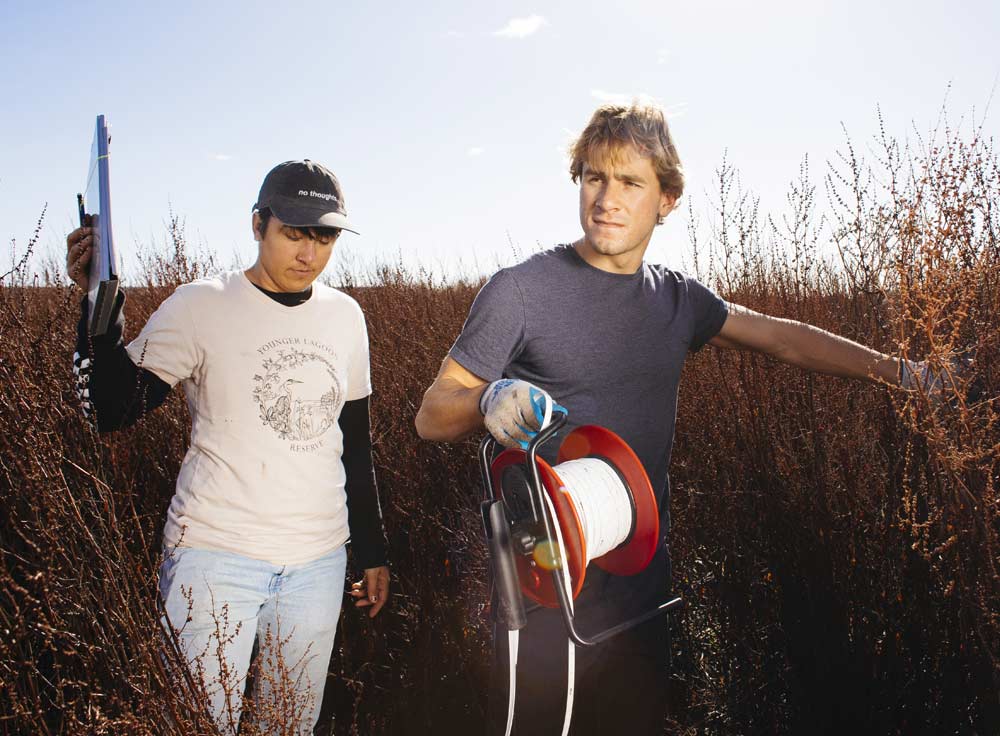
UC Santa Cruz continues its tradition of providing high-quality graduate education through innovations in program offerings, 360-degree holistic support, and professional development opportunities—all geared toward graduate student success.
The campus has embraced a graduate student success ethos, including adoption of a support model that shows the availability of student support resources from matriculation to graduation. In addition, recently implemented programs such as the Graduate Student Success Incentive Program, the Summer Research Fellowship Program, and the Peer Mentoring Support Program promote collaborations that significantly enhance student success.
The recent completion and pending full rollout of a comprehensive dashboard for graduate student postdegree job placement should serve as a valuable tool to enhance recruitment of high-quality students, and it will inform and further strengthen how the campus prepares students for postdegree success and expanded career opportunities.
The Panetta Institute Research Fellows program and the new Accelerate to Industry (A2i) program are partnerships with the Panetta Institute and major technology companies such as NVIDIA and Genentech. These programs provide graduate students with training and professional development experience in public policy, strategic planning, communication, and government/industry-relevant leadership skills to enhance student success and postdegree placement.
UC Santa Cruz is launching a range of innovative new programs to expand educational and professional opportunities. A new Master of Arts in Geographic Information Systems, Spatial Technologies, Applications, and Research launched in fall 2025. Other programs in development include an online master’s program in AI and Data Science, a Master of Arts in Anthropology, and a joint Ph.D. program in Marine and Coastal Science with San Jose State University.
Distinction in Research, Scholarship, and Creative Activities
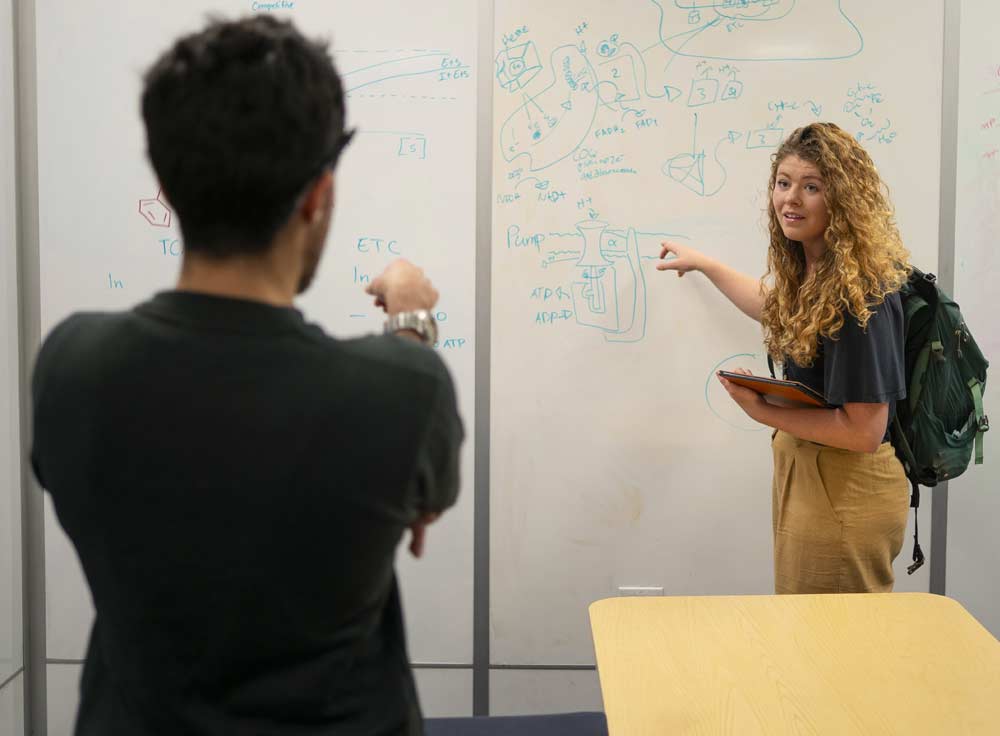
UC Santa Cruz continues to support faculty in pursuing grants for bold and ambitious research proposals, as well as in helping to make sure their cutting-edge research moves from the lab into the world for positive societal impact.
The Office of Research launched its inaugural Research Leaders Academy in winter 2026. A dozen research-active faculty were invited to participate in a 10-week professional development program to equip them with the skills and knowledge to build collaborative teams and compete for large, center-scale funding.
The academy included topics such as getting support from campus leadership, competitive intelligence, team science and collaboration, and project management.
The participants connected with faculty colleagues and new potential research collaborators, and came away inspired and motivated to pursue their larger research visions. The Research Development team will continue to meet with faculty to help them strategize on next steps and identify potential funding sources. The campus plans to offer another Research Leaders Academy in 2026–27.
With a $2 million gift from the Mellon Foundation, the UC Santa Cruz Humanities Division is expanding the Employing Humanities initiative to serve more students each year, while also launching new programs designed to broaden access and reduce barriers.
Increased support for the initiative ensures that more humanities majors will graduate not only with critical-thinking skills and ethical insight, but also with the confidence, experience, and relationships to carry those strengths into meaningful careers.
Faculty excellence was recognized with Anna Tsing and Terrie Williams elected to the American Academy of Arts & Sciences; Katharyne Mitchell and Adina Paytan named as Fellows of the American Association for the Advancement of Science (AAAS); and Adina Paytan and Douglas Lin elected to the National Academy of Sciences.
UC Santa Cruz’s Innovation Catalyst Proof-of-Concept Program is continuing to help move cutting-edge research from the lab out into the world for societal impact. The 12-month program, managed by the Innovation & Business Engagement Hub, provides targeted grant funding, industry mentorship, market research, and customer discovery training to help researchers commercially validate their technologies.
In 2025–26, the program supported Assistant Professor Vanessa Jonsson, who is developing ImmPrint-SwabSeq, a diagnostic tool to detect multivirus infection and immunity; and Professor David Lederman, who is developing novel energy-efficient electronic switches to meet critical needs in fields such as communications, medical technology, and avionics. Both of these technologies are positioned for commercialization through new startup companies.
In this same time period, three technologies previously supported by the program transitioned to become the foundation for startups that aim to commercialize the promising innovations. Both the biodiesel and hydrogen technologies from Professor Scott Oliver’s lab are being developed by energy-related startups.
Professor Ted Holman is working with a startup to advance his lipoxygenase inhibitor technology. Lipoxygenase is an enzyme pivotal in human health and is linked to diseases, including blood coagulation, heart disease, and diabetes.
The microfluidic drug delivery system from Professor Mircea Teodorescu’s lab is advancing through a new startup with university-associated founders. The technology automates complex workflows, ensuring the viability of neural cultures and enabling nonexpert users to conduct sophisticated experiments.
An Inclusive and Thriving Campus Community
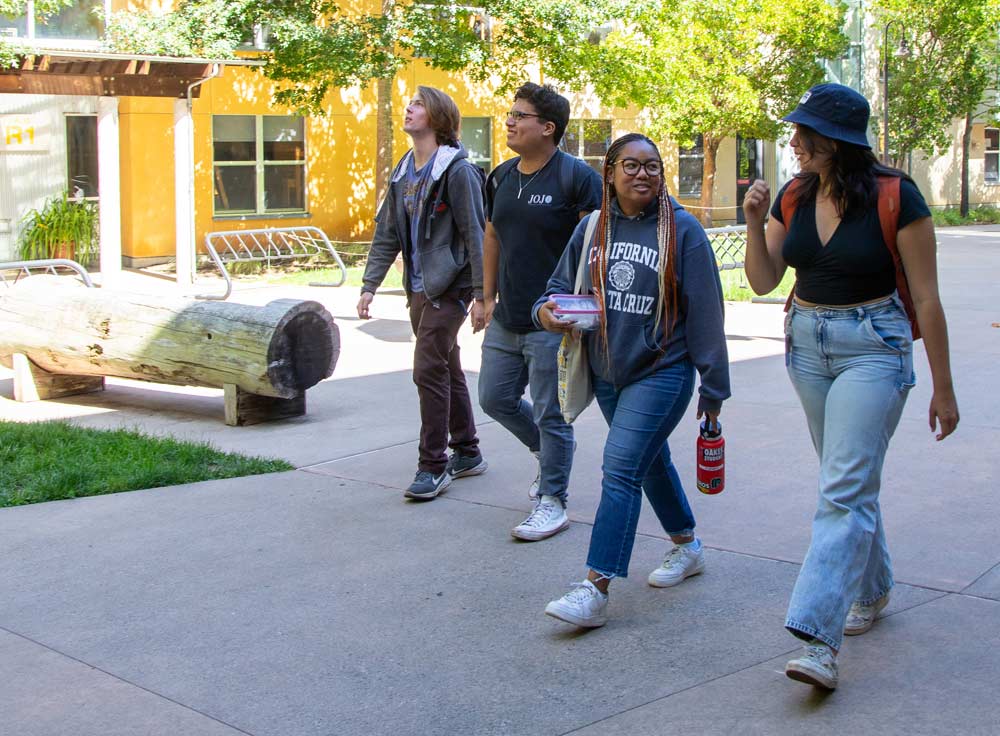
To create and sustain a campus climate that supports the success and well-being of all students, faculty, and staff, UC Santa Cruz continues to deliver and expand educational programs that advance cross-cultural understanding while also working to identify priority support areas.
The Division of Student Affairs and Success delivered more programming for students, including roller-skating outings, movie theater takeovers, a concert in the Quarry Amphitheater, and the launch of the inaugural Go Bananas! Carnival, which attracted more than 2,500 students and created new opportunities for connection and campus pride.
The programs delivered by the Office of Diversity, Equity, and Inclusion include Empowered Together, a skill-based, eight-week synchronous professional development program open to all employees; Community of Interest, a historically focused, synchronous professional development program open to all employees; and Histories in Progress, a series of historically based, asynchronous educational programs for faculty, staff, postdoctoral scholars, and graduate students that will be available in 2026.
The office also conducted a Senate Faculty Support Survey, which invited faculty to share thoughts and concerns. With the Office of Academic Affairs, the office is analyzing the survey data to identify new opportunities to support faculty.
Climate Change, Sustainability, and Resilience
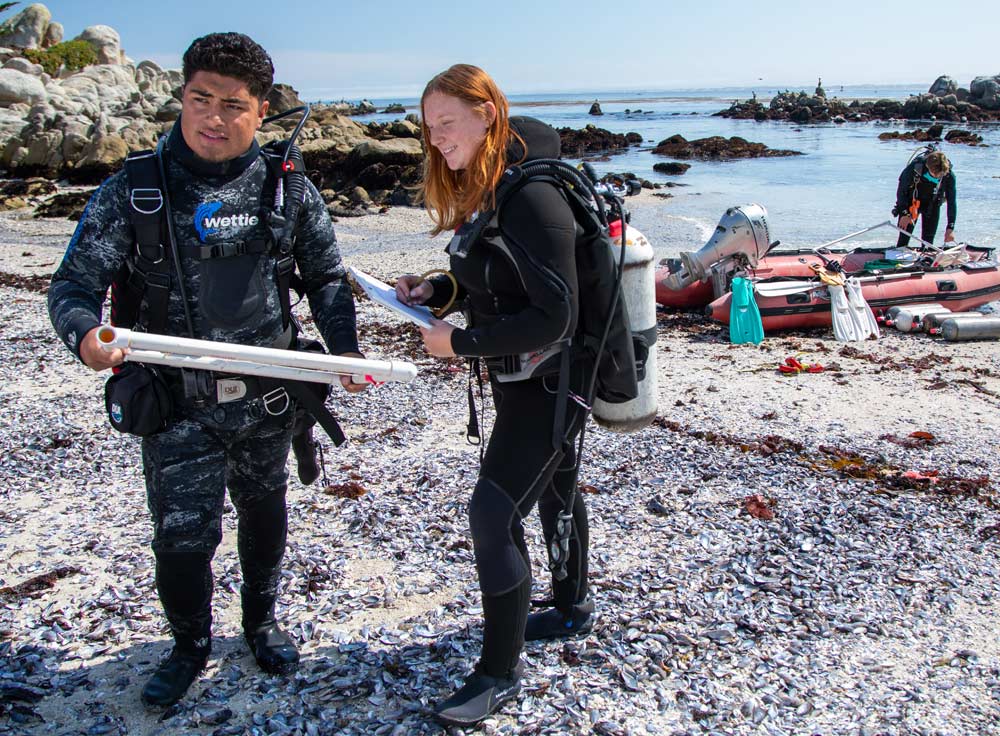
Through teaching, research, and operations, UC Santa Cruz is continuing to address climate change and its impacts.
The Joint Senate-Administration Committee on Climate Change, Sustainability, and Resilience (JCCCSR)—which includes three subcommittees focused on research, teaching, and operations—continues to guide and advance campus efforts.
To make sure all students graduate with a foundational understanding of climate science and justice, the committee has proposed a new interdisciplinary general education requirement, which is being considered by the Academic Senate.
Building on its commitment to climate equity, UCSC launched the Interdisciplinary Climate Justice Scholars Program to support collaborative public-facing research and strengthen interdisciplinary climate justice scholarship.
With support from the Carbon Fund and the Board Opportunity Fund, the Teaching and Learning Center will launch a climate teaching learning community in the 2026–27 academic year.
UC Santa Cruz reduced greenhouse gas emissions across Scopes 1, 2, and 3; lowered potable water use; and decreased the procurement of single-use plastic beverages. At the same time, the campus expanded sustainable and plant-based dining options, increased purchases of fully electric vehicles, and substantially grew its Green Labs certification program.
In support of operational continuity, UC Santa Cruz continues to make progress in its long-term effort to strengthen its electrical system, both by increasing its reliability and furthering its sustainability.
Campus infrastructure reached important milestones as three electric buildings—the Rachel Carson College Dining Hall, Kresge Academic Building, and Kresge Residential Halls—earned Leadership in Energy and Environmental Design (LEED) certification.
UC Santa Cruz leaders and engineers continue to meet monthly with PG&E to review the quality of power being delivered to campus and ensure compliance with regulatory standards. These discussions are critical to identifying both immediate operational changes and long-term infrastructure improvements, including a new secondary feed to campus. This service will initially provide power to Heller Student Housing South, with long-term plans to also serve as a power source for the broader campus.
New microgrid systems—localized, self-contained electrical grids that can operate independently from the larger utility grid—are advancing at several campus locations: the Monterey Bay Education, Science and Technology (MBEST) Center; the Emergency Response Center (ERC); the Westside Research Park (WRP); and the Hagar Family Student Housing Community Building.
These projects have informed a new proposal to study a four-megawatt battery storage microgrid for the main campus. When paired with the existing cogeneration plant, this microgrid could expand the number of buildings supported on the critical power feed. Next steps include infrastructure and power quality assessments, review of existing microgrid operations, and development of a cost-benefit analysis and preliminary designs over the coming year.