
Michael Loik, Colleen Josephson, Greg Gilbert, and Matt Sparke – Innovations in Monitoring and Control of Powdery Mildew in Forests, Fields and Facilities
Climate change creates challenges for agriculture and forest management such as droughts, extended wildfire seasons, warmer heat waves, and stormier winters. Variable weather will drive direct impacts on forest health, farm productivity and worker safety, and will make tree pathogens more difficult to manage. One fungal pathogen that causes considerable loss is powdery mildew, a pathogen found in forests, farms, and greenhouses. Powdery mildews require tremendous time and expense for management, which usually takes the form of chemical fungicidal control. The goals of this research were to (1) generate new innovations for monitoring and controlling powdery mildew and (2) develop a training program to help regional farm workers adapt their careers in relation to agroecological and technological risk management and intervention.
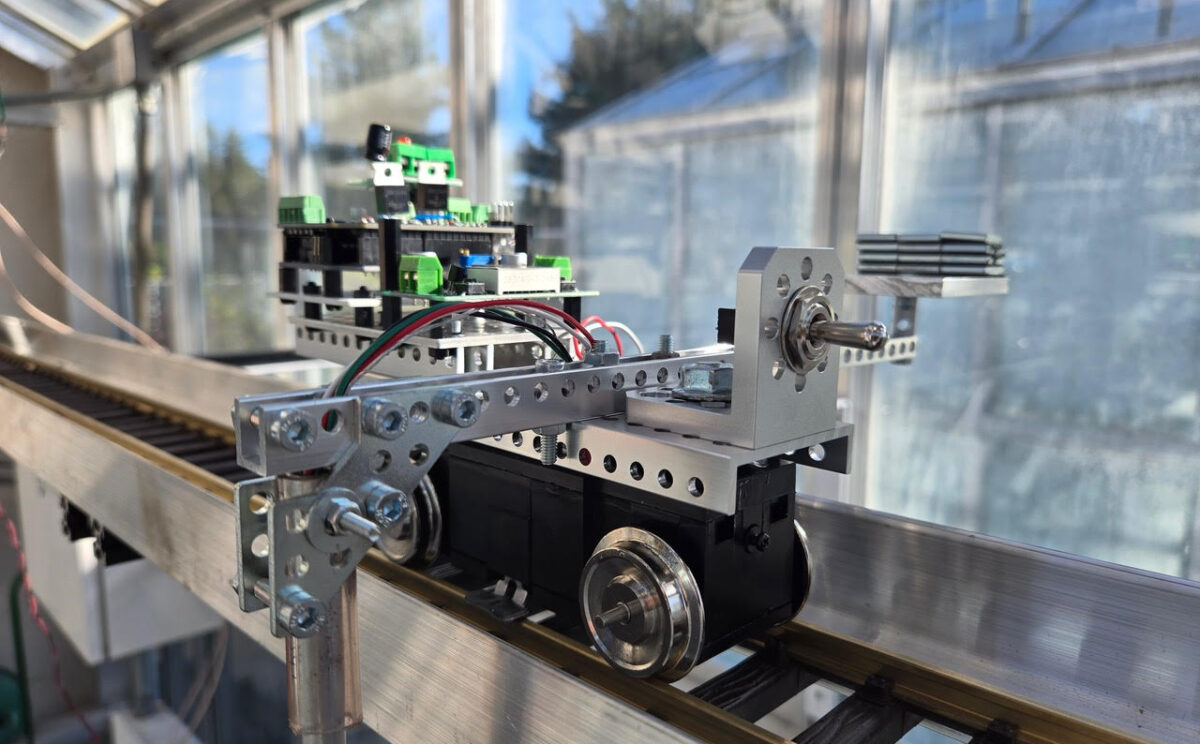
The team made several technological and management advances. They built and tested a mobile robotic system for monitoring and treating plants in greenhouses, called TrackDrone, which consists of a multispectral camera, an infrared camera, a cell phone camera, and a UV-light for treating plant diseases. They extended the functionality of a custom-designed, low-cost, open source datalogger to support a biomimetic leaf wetness sensor. The leaf wetness sensor can quantify the duration of leaf wetness, a crucial indicator for predicting the onset of fungal diseases. They found that powdery mildew-infected lettuce leaves are capable of photosynthesis until they wilt. They also documented the diversity, distribution, and seasonality of powdery mildew and its hyperparasite Ampelomyces quisqualis across managed and wild habitats across Santa Cruz County, and developed and tested experimental and molecular protocols to study the impact of the hyperparasite on powdery mildew infections. Finally, the team reviewed the literature on training programs and educational research related to workforce development in the context of changing pest ecologies as well as advances in ag tech control.
Jarmila Pitterman, Hannah Waterhouse, Darryl Wong – Developing Climate-Resilient Crop Systems: a multi-trait analysis of crops and soils under dry-farmed and irrigated treatment
Climate change models predict increasingly hot and dry weather conditions, which will impact agricultural production and food security in the years to come. Answering this challenge is organic dry farming, a sustainable practice that allows growers to produce crops under hot and dry conditions with next to zero irrigation and grower input. Dry farming has many benefits for the grower and for the environment, including improving aspects of soil health. The specific research goal was to investigate the traits that allow dry-farmed crops to succeed while measuring the impact this practice has on key soil attributes.
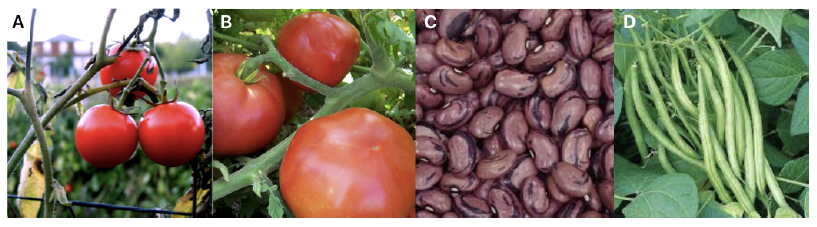
The research team planted the crops in June 2024 at the UCSC Farm, established two watering treatments, and monitored the plants with bi-weekly physiological, morphological, and anatomical measurements. Once the plants were ready for harvest, they collected fruit measures such as marketable yields and brix sugar content. They also sampled soil attributes at the beginning, middle, and end of the experiment to investigate plant-soil processes. In comparisons of Hopi beans and French green beans, they found that while dry-farming had little impact on the bean plants and surrounding soil, dry-farming did reduce yields and bacterial symbioses for both varieties, which may reduce bean quality. In comparisons of Dirty Girl and Slicer tomatoes, they found that Dirty girls grew taller, produced thicker leaves, and had lower water potential and higher transpiration rates under dry-farmed conditions. Thus, Dirty Girls are more able to tolerate water deficit. In addition, Dirty girls also out-performed Slicer tomatoes under regular irrigated conditions. Their study has strong implications for varietal choice for dry-farmed crops, which have been communicated in grower guides in both English and Spanish.